


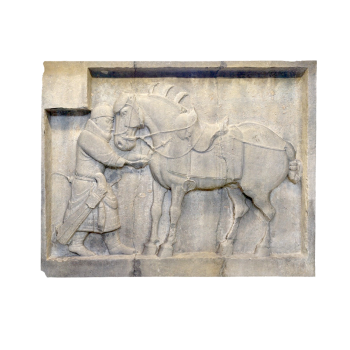
One of the stone reliefs of six horses in Zhaoling "Sa Lu Zi"
"Six Horses of Zhaoling" is a stone relief sculpture made by Emperor Taizong Li Shimin (reigned 626-649) to commemorate the six war horses he rode during the process of establishing the Tang Dynasty and unifying the whole country. This relief depicts the scene of Li Shimin's mount "Sa Lu Zi" (its name means "Qiu Lu" in Turkic language) after being injured by an arrow in battle, and the general Qiu Xinggong drew an arrow for it. In 1914, "Sa Lu Zi" and another war horse "Boxing Mao" were stolen and sold out of the country and are now in the Museum of Archaeology and Anthropology at the University of Pennsylvania.
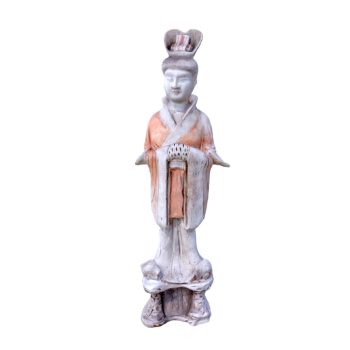
Painted pottery female figurines of the Tang Dynasty
This is a Chinese Tang Dynasty painted pottery female figurines (or ladies figurines). It was made in China during the Tang Dynasty (618-907) and was one of the funerary objects (Ming ware) in the burial culture of that time. The terracotta figures are dressed in wide-sleeved gowns with cross-necked collars, their hands close to their chests, their hair in a high bun (similar to the popular "high bun" or "fallen horse bun" at the time), and their faces are plump and round. This plump shape is the embodiment of the aesthetic ideal represented by Yang Guifei in the prosperous Tang Dynasty. They usually appear in groups and are placed in the ear chambers or corridors of noble tombs, symbolizing the maids, kabuki or attendants of the tomb owner.
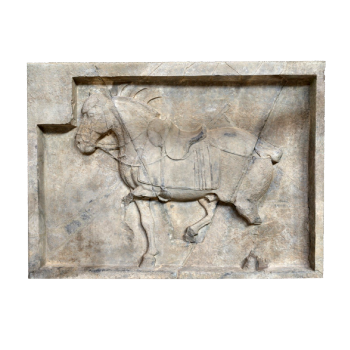
Liujun Stone Carving Relief in Zhaoling
This is one of the stone reliefs of "Six Horses of Zhaoling. The six horses in Zhaoling are stone reliefs carved by Emperor Taizong Li Shimin (reigned from 626 to 649) to commemorate the six war horses he rode during his war. The horse in the image is called "Punch Hair", which is named after its curly hair. In the battle with Liu Hei-yi, Li Shimin rode this horse. The "Zhaoling Liujun" was originally located on both sides of the northern altar of the Tang Taizong Zhaoling in Liquan County, Shaanxi Province. Among them, "Boxing Mao" and "Lu Sa Zi" were stolen and sold to the United States in 1914 and are now in the Museum of the University of Pennsylvania. The remaining four Jun are now in Xi'an Forest of Steles Museum
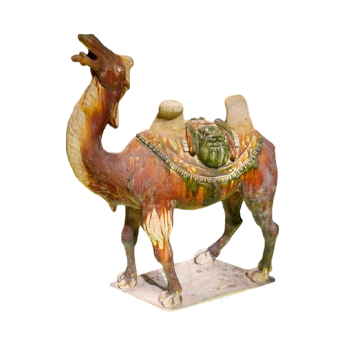
Tang tricolor camel
Tang tri-colored camel, an ancient Chinese pottery figurines art. It is a low-temperature glazed pottery made of clay, usually using yellow, green, white (or brown) and other glaze, hence the name "three colors". This style of pottery figurines prevailed in the Tang Dynasty (618-907) and was a treasure of the ceramic firing process at that time. Tang tricolor camels are mainly used as burial objects (ghost), reflecting the tomb owner's desire to enjoy a rich life in the grave. In the Tang Dynasty, the camel was an important means of transport on the Silk Road, known as the "ship of the desert".
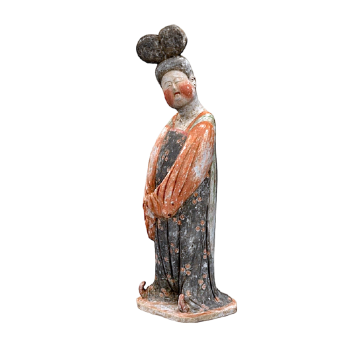
Painted Handmaid Figurines of Tang Dynasty in China
This item is a painted pottery female figurines from the Tang Dynasty (618-907 AD) in China, commonly known as the Tang Dynasty maid figurines. The style of sculpture clearly reflects the artistic characteristics of the Tang Dynasty. In the Tang Dynasty, the national power was strong and the aesthetic preference was for a rich female image, which was fully reflected in the round cheeks and posture of the pottery figurines. This kind of pottery figurines is a ghost, that is, funerary objects, unearthed in the tombs of the nobles of the Tang Dynasty. They are designed to simulate the life of the tomb owner in the afterlife, including servants, maids, musicians, dancers, horses and camels.
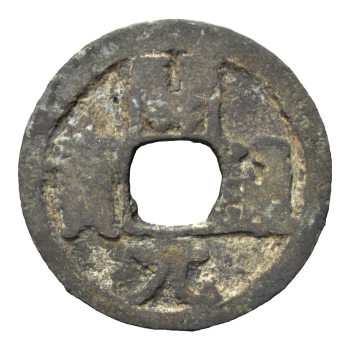
During the Wude period of the Tang Dynasty, the currency Kaiyuan Tongbao was used
Kaiyuan Tongbao "is a currency minted on August 2, 621 AD, in the fourth year of Emperor Gaozu of Tang Dynasty's Wude reign. This is the longest and most important circulating currency of the Tang Dynasty. The top, bottom, right, and left characters on the coin face are read as' Kaiyuan Tongbao ', while the top, right, bottom, and left characters are read as' Kaiyuan Yuanbao'. Although "Kaiyuan" was a reign title of Emperor Xuanzong of Tang, "Kaiyuan Tongbao" was not a reign title coin, nor was it a currency that only began to be used during the reign of Emperor Xuanzong of Tang. The main reason why Tang Gaozu's reign title was named "Kaiyuan Tongbao" instead of "Wude Tongbao" was that there was no market for reign title coins at that time.
![[Cultural Relics of Tang Dynasty] Painted Female Figurines of Tang Pottery](https://file.freecreat.com/user/43/43/2023/1124/142654gSyb2mO7.png?x-oss-process=image/resize,m_pad,w_350/quality,q_80)
[Cultural Relics of Tang Dynasty] Painted Female Figurines of Tang Pottery
Tang pottery painted female figurines are painted female figurines of the Tang Dynasty. The female figurines are dressed in a bun, their faces are painted with red powder, their silkworm eyebrows are detailed, and their facial features are relatively concentrated in the center of their faces. They are slightly compact. They are dressed in long skirts, their hands are caged in front of their chests, and they are paunchy. They seem to be walking slowly. After the middle of the Tang Dynasty, especially during the Kaiyuan and Tianbao years, the fashion of taking obesity as beauty gradually formed in the society. Concubine Yang was favored by Li Longji and pushed this fashion to the extreme. This female figurine is a typical reflection of the aesthetic tendency in the prosperous Tang Dynasty.

Popular Models
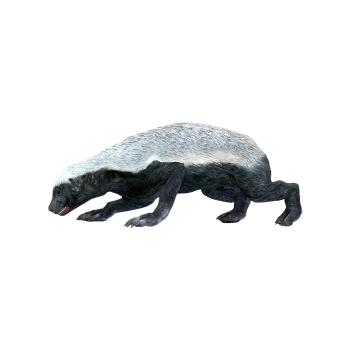
Honey Badger (3D animated model)
192 View
Guinea fowl (3D animated model)
163 View
Wild Goose (3D animated model)
185 View
Red Fox (3D animated model)
153 View
Random Model
Pineapple
577 View

Home heating pipe
825 View

French Desaix destroyer
637 View

Japanese-style Cast Iron Teapot
845 View

PPB-Pro portable battery
876 View
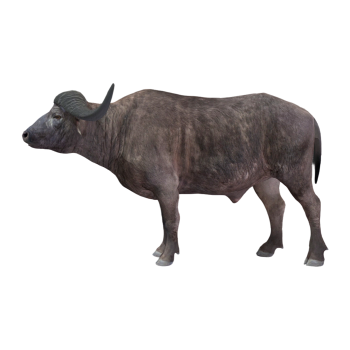
Buffalo (3D animated model)
181 View

Zhaoqing forever hall aunt's house
660 View

Japanese salmon fish roe sushi
987 View

Vintage decorative hourglass
631 View

Classic Backpack
573 View